In Matthew 5:21-48 (Antithesis), Jesus teaches on foundational subjects that help define the Way.
The first four chapters of Matthew lay the groundwork for Jesus’ ministry, covering heritage and birth, John the Baptist, Satan’s first temptation, the calling of the first disciples, and the beginning of Jesus’ healing ministry. Chapter five begins Jesus’ teaching ministry, beginning with the Beatitudes. The Beatitudes introduce the enlightened path of the Way. Later, the Antithesis scriptures, such as in Matt. 5.22, draw the contrast between the Law as was currently taught and what Jesus now presents as the enlightened thinking of the Way. These are the first teachings that contrast and then transcend the then current interpretation of the Law of Moses.
Beginning in Matt. 5.21, Jesus begins to clarify the laws in relation to the Old Testament teachings. Jesus begins with ‘Thou shalt not kill (murder)’ (21), also found in Ex. 20.13. Jesus ends with 5.48, “…be ye perfect (whole),” also Lev. 19.18. How Jesus speaks throughout this extended passage allows us to observe the subtlety of the enlightened pathway and the nuance of Jesus as a teacher.

‘Who would you rather rule, Jesus or a Pharisee? ’
◊
F O R G I V E N E S S
Let us address the first antithesis, regarding murder. In Matt. 5.22 Jesus inserts an unusual statement, rarely mentioned by pastors or lecturers. Jesus says, “But I say to you, that whosoever is angry with his brother without a cause shall be in danger of the judgment.” A serious slight may cause anger, but it should be handled appropriately and settled without retribution. But to carry anger without cause allows that anger to build, producing a kind of venom and the lowering of the mind into grudge-holding.
‘Without cause’ displays a lack of maturity and forgiveness, and reduces the person’s emotional condition. One can sour within his or her emotional realm and become bent. This kind of anger closes the door to the enlightened vision. One becomes held within a prison of unforgiveness. Just as boundaries appear relative to what you may receive, there are boundaries to the prison you create.

Jesus continues, “…and whosoever shall say to his brother, ‘Raca,’”* which is to make disdainful statements, especially derisive or cursing them; “…shall be in danger of the Sanhedrin” means to be judged by the local Sanhedrin; “… but whoever shall say ‘Thou fool’ shall be in danger of hellfire,” means someone who has forsaken divine knowledge or cannot recognize it, one who operates from vanity (Self) engendering bitterness or hatred, and thus places himself in a position to not only be judged but also condemned!
*Raca (Raqa) (Aramaic): worthless; also, to hammer on, to beat on; concerns metalworking—striking and wrath.
Jesus is no longer talking about the crime of murder itself, but that anger and wrath destroy the heart condition of man. It is the anger that instills the motive base, which then leads to the murder, much as we see with Cain. The pathways of the heart and mind become abused. The man’s pathway begins to slip unknowingly from his fingers, and in effect, he spiritually rends himself; he has condemned himself!
The pathway of heart and mind, the Way, teaches us to avoid the traps the current hierarchy has fallen into. It is better to release the heart to the spirit, discover its wounds, and begin healing than to doctor yourself with excuses, grudges, rules, or explanations. This crossroads is where self-examination, even self-criticism, can awaken us to confession and the truth of our Self. The simplicity of such an approach can shatter the heart’s complexities, order the soul, and provide peace.
Jesus addresses the crowd in a personal, heartfelt, yet specific and straightforward manner. He does not teach the way of men; he teaches the Way of God. Even as Jesus speaks, the Spirit’s presence replaces the world’s logic. Something must activate the process: to reach out, to pray, to ask, to knock, or to seek. And it is here that Jesus speaks of what must be the core of the Way, which is forgiveness and love. These two attributes work in tandem. With the addition of faith, a triad of sound spiritual strength and performance is established. To forgive your way out of such a condition, as verses 23 & 24 refer to: “…be reconciled to your brother, and then come and offer thy gift (sacrifice, prayer or attribution),” gives us the core principle of reconciliation. It is hard to love when you are unforgiving. Although faith is fundamental, Jesus assigns forgiveness as the day’s first priority.
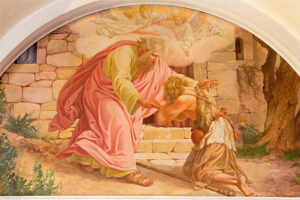
Forgiveness opens doors to greater understanding and wisdom. Expressing forgiveness heals deep-seated emotional wounds within the soul.
The Matthew scriptures exemplify what you hold onto and what pathways of heart and mind you allow yourself to travel. Both John and Jesus spoke on these issues. Hatred for the Romans was the preoccupation of the day, yet Jesus would later teach that a person goes the extra mile to demonstrate love even to enemies and forgive them for their trespasses. Within an omnibus presentation of love and consideration, Jesus’ teaching of the Way becomes a precise instruction regarding attitude, motive, and conduct.*
*Marven Vining writes in Jesus the Wicked Priest, “Contrary to popular belief, love and forgiveness are not empty, feel-good ‘works,’ they are the necessary and sufficient conditions of being a Christian—the very means of accepting Jesus as one’s savior.” Baer and Co., division of Inner Traditions. Marvin Vining, copyright 2008, p. 109.
In Jesus’ teaching of the Way, the first order of events is to forgive. In that manner, your pathway toward God becomes unencumbered and thus clarified. Without forgiving, you will always be held back. Jesus places love-forgiveness above all other character attributes and defines forgiveness as the foremost quality in the enlightened journey of heart and mind. Lack of forgiveness clouds the pathway.
All people believe and invest in different ideas, and it seems we all carry various loads. When we finally recognize the ‘board in our eye,’ the condition of our personal beliefs is truly revealed. We can observe anger and wrath through our expressions, reactions, and general mentality, which too often replace forgiveness and love. Finally, we reach into the heart of the Way, viewing a different and dynamic measure of soul progression. Jesus teaches a new perspective on the Self and the world.
70 Times 7
Peter asks, “Lord, how oft shall my brother sin against me, and I forgive him? till seven times?” (Mt. 18.21). Jesus replies, “I say not unto thee, Until seven times: but, Until seventy times seven.”
The above scripture contains two crucial factors. The first scripture deals with the number seven, which signifies completion or a task completed, and can also represent perfection. That Jesus says to forgive seventy times seven informs us that the ‘normal seven times completion’ may not be enough and that you must continue to forgive until you have truly and completely forgiven, no matter how long it may take.
A lack of forgiveness leads to a hardened heart. If lack of forgiveness is the problem, sow a forgiveness seed for harvest, speak the Word (spirit) to reveal and remove the stones in your heart, and pray for a more forgiving nature. Yet another way to understand Jesus’ instruction is that forgiveness should be never-ending. This last references itself to the eternal principles of the Way and, in some respects, to Christ’s eternality.
Daniel 9.23-25:
(23) “…therefore understand the matter, and consider the vision.
(24) Seventy weeks are determined upon thy people and thy holy city, 
to finish the transgression, and to make an end of sins,
and to make reconciliation for iniquity, and to bring in everlasting righteousness,
and to seal up the vision and the prophecy, and to anoint the most Holy.
(25) Know therefore and understand,
that from the going forth of the commandment
to restore and rebuild Jerusalem unto Messiah the Prince…”
70 x 7 = 490 years, the number of years from Malachi to the Messiah. In Dan. 9.24-25, “seventy weeks” is 70 x 7’s, and the reference is years*. During these 490 years, the Jews remained without true prophets.
*History notes: The Book of Daniel is now thought to have been transcribed approximately 150 BC, and would be considered more of an Essenic text or version. This transcription presses for Messiah as close to arriving. Messiah’s arrival is one reason for the original Essene retreat into Galilee and northward, partly to prepare for the Messiah, even as they removed themselves from the corrupted Sadducees. Another reason for the retreat was the Maccabean rule, which usurped David’s throne.
Using the number seven means that forgiveness should be complete. The number seven represents wholeness or perfection. The fact that Jesus associates the number seven with forgiveness tells us everything: forgiveness is preeminent. Messiah himself is now pronouncing this truth! In other words, forgiveness must come first, before all attributions (sacrifice) before God, and all approaches to God. A person is not intended to be left bereft of other qualities concerning soul development, but forgiveness and its attendant companion love must remain nearby and should be employed liberally.
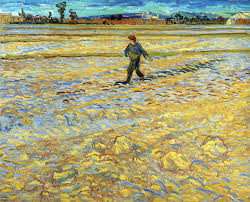
Less than forgiving? Pray and sow seed for a more forgiving heart & mind.
The enlightenment principle of forgiveness allows every soul to release grudges and similar attributes. Therefore, forgiveness begins constructing a new order of events, not only as you express into the physical world but also a reordering of personal nature. This reordering is a part of the transition, even transmutation, into the better man so many of us wish to be. This process points out one of the great mysteries of the kingdom. The Christed nature that the Holy Spirit is building in you should manifest as forgiveness upon forgiveness and love upon love, Jesus essentially states. Practicing forgiveness redirects and enhances anyone’s spiritual pathway.
Essentially, the spirit behaves as if permitted to reorder the thought structure of thinking, attitudes, and motives. A new order for soul progression comes into play. A pathway becomes established whether the person is conscious of this fact (see Unconscious Growth). The forgiveness pathway Jesus lays out must be an essential part of the enlightenment into the spirit of God. Jesus espouses a heart teaching that begins to separate itself from the Old Testament interpretations of his day. Jesus connects love to forgiveness (Mt. 5.43-48), and the Law is shunted to its proper place.
Throughout these articles, ‘forgiveness-love’ is often written in the form you see here, as if inextricable. They are. Forgiveness and love are almost always associated. If you are loving, you will forgive. If you forgive, forgiveness becomes an act of love. For this reason, many people pray for forgiveness and finish by sending out love. To sow that your heart be tempered has a similar result. At first, these actions may not seem to have much effect. However, they begin to work in the soul incrementally and may profoundly push forward one’s understanding and progress. For Jesus infers to others: ‘Who am I not to forgive? And who am I that I should not love?’
◊
W O M E N: of the TIMES and of the WAY
The following antithesis (Mt. 5.27) concerns adultery and sexual lust. Jesus begins (v. 28) by chastizing those who lust, usually associated with men, but in our modern times may include women as well. Jesus continues to address the man’s heart condition and his manner of thinking. Jesus also holds the one who lusts as responsible. The phrase, “…whosoever looketh…” means anyone, and implies continuing to look. The Complete Jewish Study Bible has it, “But I tell you that a man who even looks at a woman with the purpose of lusting after her has already committed adultery with her in his heart.” The Law is not involved in this matter, but the inner man or woman is. Jesus teaches directly concerning motives and attitudes, “…with the purpose,” being the key phrase here. A beautiful woman may captivate a man, but he should decline untoward thoughts. He declines to pursue his attraction with purpose, or in this case, to lust.
Ancient Jewish writers warned about lust. They also made a practice of warning about women’s seductive behavior. Jesus holds the doer (performer, creator) of the thought as totally responsible—you are responsible for your thoughts. Previously, a man could say, ‘She seduced me,’ and plead a kind of innocence, an innocence that other men of the same ilk might accept. Jesus is laying aside this kind of excuse. Should their be an incident, taking only the word of the man also comes under scrutiny. By itself, this clarity concerning responsibility becomes a major step forward. The woman may also seduce, attracting the ‘wrong’ man, with the difficulties that may ensue. Under Jesus’ interpretation, the blame argument is no longer possible, and each person is held accountable.
Jesus brings women into equality. At different times in history, women were greatly honored, even revered, but at other times received a kind of second-hand treatment. Jesus, however, is setting a more realistic standard and thus redefines the social context for individual women and women within marriage. For example, Jesus’ ministry traveled with women, unheard of during this historical period, and thus established a new historical warrant for women. Nazarenes allowed women into the priesthood. In what manner they were trained is not clear. However, Scripture indicates that Mary Magdalene was close to Jesus and would have to be considered knowledgeable. As functioning disciples, women provided a valued polarity within the ministry and assumed varied duties. They almost certainly motivated many conversions. Concerning women, Jesus points to a far more profound spirituality than had hitherto been understood or accepted.

Within some pagan cultures, women became helpless and trapped. Men married and then traded off the woman with a quick divorce, staying married for no more than a few months or a year. They passed the women around, divorced them, and took on another wife. The women had no wealth or provision to meet their needs (Gn. ch. 20, Gerarites, Philistines). Denigrating marriage into no more than an agreement to have sex for a while, the women, of course, became controlled and used (abused) by the Gararite men. To denigrate women, or for women to denigrate men, makes for an unsound society.

Women performed important tasks as ministers.
Men did not generally address women unless related or if they were family associates; the same was true of women speaking to men. ‘Strange’ women (unaccompanied) were looked upon with suspicion as to motive and doings. Interestingly, as all the other women within the disciple group were married, the unattached status concerning Mary Magdalene is not mentioned by any of the Pharisees or scribes, which suggests she is ‘accounted for’ in some other manner. She is either married to Jesus and no comment should be raised, or she carries a status of her own, which is recognizable, or known. It is important to note that Mary of Magdala is referred to by place, not family. That, in itself, is most unusual.
Within the Nazarene community women not only could be, but were ministers. Women were perceived as equal but different, but were considered Children of God as were men. These last notions are reflected by Levi when he states in Mary 9.8-9, “Surely the Savior knows her very well. That is why he loved her more than us.” Mary is also known as a main financial supporter, which indicates a different status than almost all other women of her time.
Most villages were small, and all people considered difficulties along familial lines important. In part, the Jews created divorce laws with the idea that we are not pagan and that we treat women differently. The intent behind the prohibition on divorce was to protect all women and to secure family. Men could no longer indulge themselves, men constrained men. Alternatively, marriage is the proper arrangement for a family, and thus, the underpinning of society remains stable. Provision was made for widows and orphans. However, the provision for widows was left to the next male kin, usually a brother, and in some cases that made for less than ideal circumstances for the widow. Even so, the abuse of women was not condoned, and the crime of aggravated rape was assigned the death penalty.
The issue of women ‘submitting’ is misconstrued today. The usual scripture given for this submission is Ephesians 5.22, but should more correctly be read from 5.20 through v. 33. The ‘submit’ portion of this text is closer to the woman providing an array, perhaps a backdrop or sounding board which is listening and basically accepting. It is based on respect. This kind of submission allowed the woman to speak to the husband’s decision without arguments erupting and hard feelings developing, and further, this submission only applies to her husband, not all men. The man is proscribed to love his wife, but does not mean she should agree with him on every matter.
Also, this stance allowed for the counseling nature of women to be expressed in a healthy manner, instead of contentiously. It did not mean that the woman was without a voice, she also may submit her views, which is an alternate useage of the word ‘submit,’ but in this case is correct. Home decisions were most often made by women, whereas worldly views and actions usually described the man. Roles were defined out of necessity, and children were trained along those lines, not only for the sake of family structure but so that a general order and comity remain in place.
There is another reason marriage without divorce became important among the Nazareans. Although purity was high on the list of objectives, and this was in part due to the importance of lineage, but it seems true that the continued relationship between masculine and feminine essences was also a significant goal. The coming together in union, whether sexually or socially, shares the masculine and feminine essence and nature. The spiritual growth of both partners continues until the death of one, and there should be no mixing as in the case of adultery.*
*“Jewish law about adultery technically addressed only intercourse with married women; the marital status of the man was not relevant,” from The IVP Bible Background Commentary, 2nd ed. John 8.7-11 releases the woman from being the only one who should be held accountable, with the men portrayed within this scripture leaving the scene, they were convicted. Nor was the man who interacted with the woman brought forth for testimony. Essentially, this was a trap set up by the Pharisees to ensnare Jesus, with the woman used as a victim—if Jesus had said she should be stoned, she would have been killed. By this interaction (Jn. 8), a new moral standard is set; men are accountable for their indiscretions, they are no better nor worse than the woman.
Disease was generally a problem, but venereal disease had become a big problem. Marrying at an earlier age was considered good, both the man and the woman were expected to be virgins. Therefore, generally, children were born healthy, without at-birth disease or disfigurements. As to family, both partners have a shared goal, a goal outside of Self or self-gratification. Rightful service as parents as well as communal social standards form the basis for the tight-knit Nazarene Essene community. Nazarene desert communities were generally more isolated. Avoiding temptation was considered wisdom. Many historians have noted that they held little commerce with the world, thus limiting their interactions, but allowing those of the community to reach their spiritual goals.
*

As to the ministry itself, Jesus speaks directly to the thought condition of the person as well as the person’s actions. Similarly, John the Baptist mentions that being sons of Abraham (outward condition or actions) no longer provides the ‘covering’ that will accommodate the new standard Messiah heralds, which addresses the inward condition. The focus always returns to the inner man, his thoughts, his motives, his attitudes.
Jesus speaks toward respect for women by admonishing to not lust after them. Here he moves to the thought-teaching concerning he or she who beholds the object, whatever the object may be. Although a sexual connotation is the usual context for lust, there is far more lust after the world than just sex, money being just one. The nub of the issue is your thoughts, particularly your lusts, and the order of events that may follow. The mind that prospers lust conflicts with the heart (Mt. 6.21; 15.18-19). “These are the things which defile a man,” Matt. 15.20.
 Jesus also addresses the condition of the heart throughout his teaching of the Way. He is constantly probing—what is the condition of your heart? Your knowledge base may be helpful, even important, but the heart condition is fundamental. The heart condition referred to is a spiritual heart, representing a deeper pull or commitment, and not like man’s emotional reactions. Heart knowledge, as it is referred to today, sometimes a deeper or more convicting awareness, is a revealed expression of the spirit within. The heart tells the tale of a man or woman, for out of the mouth the heart becomes expressed.
In Matt. 5.28 Jesus infers that sexual lust pollutes the heart, “…already in his heart,” just as adultery pollutes the body. What we do may be at issue, but the logos of the mind and heart become the focus, for that is where everything begins. Understanding the logos of heart and mind are fundamental to the Way.* The Hebrew Bible mentions the heart quite often, with the more famous quote from Proverbs 4.23: “Keep thy heart with all diligence; for out of it are the issues of life.” ‘All diligence’ tells us what an important matter is the heart condition. To sow for a tempered heart and a tempered mouth would be highly regarded for those following in the Way. Perhaps our current times illustrates the need for this sowing quite well.
*see Love-Oneness
Heart (vibration) and mind (structure) create, words bring power, and the will initiates action! Jesus encourages that actions be in the spirit and not engendered through lust, for whatever object the lust may be. Throughout his ministry Jesus consistently clarifies the nature of the Way, which is not about purity rituals, sacrifices, intellectualism, or strict rules. The Way is about what you think, your attitudes and motives, and thence your actions.
Even from the beginning, God addresses what a person thinks: Eve opens to the temptation, she lusts after the fruit, and she parta
 kes; Cain becomes jealous and thinks murderous thoughts, and he finally carries them out. Sin crouches by your side, God tells Cain, if you view the world through the eyes of jealousy or lust. The precision of Jesus’ teachings is outlined here, with the essence focusing on the individual.

Located at a busy trading center such as Haran, there would have been many opportunities to spread the Word of the One God, Creator of all things and in all things, God of the heaven and the earth, which is what both Sarah and Abraham did teach. For decades, both were ministers long before Abraham received his guidance to step into Canaan.
Gen. 12.5, “…all the substance they had gathered, and the souls they had gotten in Haran; and they went forth to go into the land of Canaan, and into the land of Canaan they came.” Later, Nazarene practices revealed a similar and closer association with women, even within the ministry.
The Righteous Remnant, Abram, is accompanied by the Righteous Sarai.
◊
O A T H S
Verses 5.33-37 (Mt.): Jesus speaks concerning oaths, or to give your word. In the ancient world a man’s oath had to be taken as binding. Often there was no easy way to record transactions. Upon coming into court, people swore by God when giving their testimony. By contrast, all Essene practitioners were known for never swearing an oath in court. All people understood that within their teaching, the Essenes were not allowed to lie and would not lie. Not lying under any circumstances is one of many proofs that Jesus was a Nazarene Essene, for he finishes in v. 37 with, “let your communication be, Yea, yea; Nay nay, for whatsoever is more than these cometh of evil.” Jesus lays down a new order of behavior and interpretation of the Law—tell the truth at all times, and contrarily, do nothing that would require you to lie.
Swearing by heaven and discovering later to be lying was perceived as tarnishing God Himself. The tarnish is similar to blaming the devil for everything you do wrong. Also, if you have to swear by God’s throne, what is your word worth? Can anyone believe you in the normal course of your day? Why do you have to bring God into every situation wherein conflict arises? Are you so sanctified in your motives and attitudes that you attribute Him with such ease? Instead of bringing God into the problems of your day and the actions you took on your own, Jesus tells us to refrain from such speech.
Long ago, the Sadducees degenerated into a governmental/political party. Due to their Greek political connections, the Sadducees had maintained the overseership of the Temple. Therefore, many Pharisees and the Essenes considered the Sadducees the Temple Priests in name only. How better to clothe oneself in sanctity and believability than to swear by God, on your mother’s grave, or on the earth God created (v. 35)? And, so the Sadducees did. Jesus exposes the hypocrisy by telling those listening to remain a man of your word.
There is a second reason for not swearing an oath to be kept, which deals with cult membership. All cults will require a new adherent to swear an oath of some sort, usually concerning secrecy, or there will be a series of agreements that amount to an oath to be kept secret. The directness of ‘yes and no’ keeps a person clear of organizations that may not be what they seem on the surface. Being committed to God does not require a secret oath or secret behavior.
Also, God does not require an oath from you should you be called. Being called into service is enough. There is no reason for you to be adding to your own calling.

God Bless!
I am really impressed with your writing talents and also with the layout on your weblog. Is this a paid subject matter or did you modify it yourself? Either way keep up the nice quality writing, it is uncommon to look a great blog like this one nowadays..
Hi Mirra,
Everything you see, including the text, is my own.
I am so happy to read this. This is the type of manual that needs to be given and not the random misinformation that’s at the other blogs. Appreciate your sharing this best doc.
I like your writing style really enjoying this web site.
I definitely wanted to write a comment so as to appreciate you for these remarkable strategies you are sharing here. My time intensive internet research has at the end been recognized with incredibly good facts and techniques to share with my family members. I ‘d state that that many of us website visitors actually are very much lucky to exist in a really good place with many lovely people with very beneficial solutions. I feel extremely lucky to have seen your entire webpage and look forward to many more pleasurable minutes reading here. Thank you once again for a lot of things.
Simply wanna input that you have a very nice web site, I love the style it actually stands out.
You made some good points there. I looked on the internet for the subject matter and found most people will consent with your site.
Hello There. I found your blog using msn. This is an extremely well-written article.
I’ll make sure to bookmark it and return to read more
of your useful information. Thanks for the post.
I’ll definitely come back.
Great blog! Is your theme custom made or did you download it from somewhere?
A design like yours with a few simple adjustments
would really make my blog stand out. Please let me
know where you got your theme. Appreciate it
I designed the website myself but had someone else build it. The
rest of the theme, as you call it, is also my own design.
Hello, There’s no doubt that your blog might be having Internet browser compatibility problems.
When I look at your website in Safari, it looks fine but when opening it in IE, it
has some overlapping issues. I just wanted to provide you with a quick heads-up!
Besides that, great blog!
Yours is the second comment on this.
Will have my webmaster look into this. Most people seem to enjoy this work,
for which I am happy and grateful. Working with the e-book is far more
important than most people think. Head knowledge is good but heart knowledge
tells the final tale. Please practice, your life will change and will make the
information I am providing much more real…inner change is the final goal…
as your spirit provides, of course.
This design is stellar! You certainly know how to keep
a reader amused. Between your wit and your videos, I was almost moved to start my own blog (well, almost… Ha ha!)
Great job. I really loved what you had to say, and more than that, how you presented it.
Tooo cool!
What’s up to every body, it’s my fist pay-a-visit to
This weblog; this website includes awesome and
genuinely fine information for readers.
There is definitely a great deal to know bout this issue.
I love all of the points you’ve made.